
Faculty of Engineering and the Built Environment explores Short Learning Courses
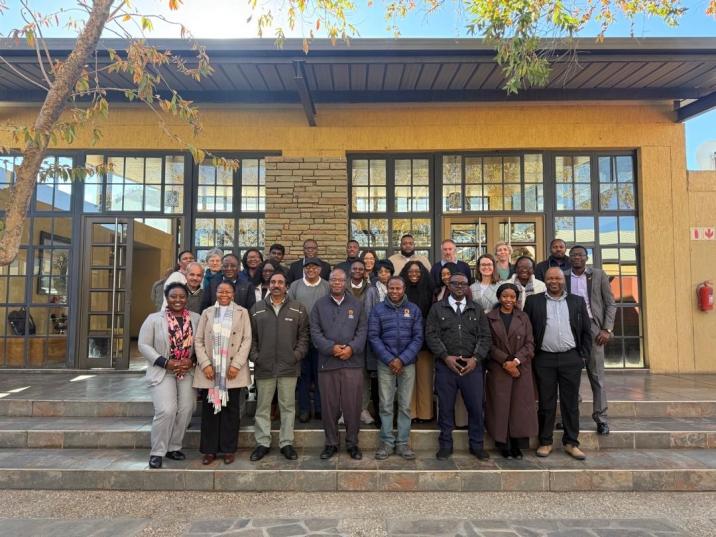
The Faculty of Engineering and the Built Environment (FEBE) at the Namibia University of Science and Technology (NUST) hosted a workshop on 9 July 2026 at NUST Hotel School to explore the potential of introducing short learning programmes within the School of the Built Environment (SoBE). The workshop brought together academic staff, programme development specialists and faculty leadership to review recommendations and identify viable pathways for industry-responsive education and professional development.
Building on the momentum of the SoBE workshop held on 22 April 2026, participants revisited key issues identified during earlier engagements on the Postgraduate Diploma in Participatory Informal Settlement Upgrading Programme. These included concerns about the programme’s name and duration, curriculum content, employment prospects, and sustainability. Ms Roxanne Murangi presented the outcomes and recommendations from the April workshop, providing a valuable foundation for the discussions and deliberations. Dr Laudika Kandjinga, Head of Department of Architecture, Planning and Construction, emphasised the need to develop programmes that respond to societal challenges while maintaining academic excellence. “We are here to design courses that meet the needs of society and meet the academic standards of NUST as an institution,” he said.
Through presentations and group discussions, participants explored opportunities for expanding learning offerings within the Built Environment sector. Proposed areas of focus included Short Courses, Postgraduate Certificates and Postgraduate Diplomas, with thematic areas including Urban Informatics, Land Valuation, Land Administration and Governance, Urban Economics and Finance, and Human Settlements. The workshop concluded with a shared commitment to undertake a broader needs assessments and stakeholder consultations to ensure that future programmes are relevant, sustainable and aligned with Namibia's evolving development needs. Prof. Harmony Musiyarira, Executive Dean of FEBE, encouraged participants to embrace diverse ideas and focus on societal impact. “We want to be a faculty that has impact. We need tangible things to show in terms of how we benefit society,” he remarked.